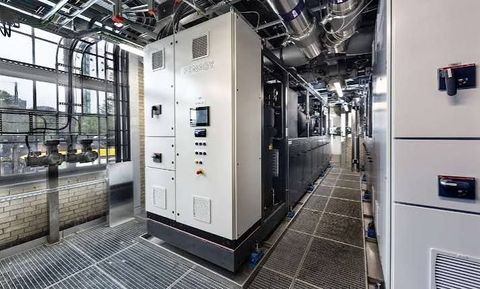
Autonomous Industrial Inspection: A Guide to Automated Monitoring, Detection, and Analysis
Autonomous industrial inspection refers to the use of automated machines, sensors, cameras, robotics, and software to examine industrial equipment, products, structures, or production processes with limited direct human control.
These systems can collect images and measurements, identify defined patterns, compare results with inspection criteria, and record findings for later review.
Traditional industrial inspection has often depended on people visually examining components or using handheld measurement instruments. While human inspection remains important, industrial environments can involve repetitive tasks, difficult-to-reach areas, high temperatures, moving machinery, or potentially hazardous conditions. Autonomous inspection developed partly to address these challenges while creating more consistent methods for collecting inspection information.
Modern autonomous industrial inspection combines several technologies. Machine vision can examine surfaces and components, robots can move cameras or sensors, and artificial intelligence can help classify images or identify unusual patterns. Other systems use ultrasonic, thermal, laser, acoustic, magnetic, or other sensing techniques depending on the material and inspection requirement.
How Autonomous Inspection Works
An autonomous inspection system normally follows a sequence that begins with data collection. A camera or sensor gathers information from a component, structure, production line, or other inspection area.
The collected information is then processed by software. Depending on the system, the software may compare measurements against predefined limits, recognize visual patterns, create three-dimensional models, or identify changes from previous inspections.
A typical workflow includes:
- Defining the inspection area and criteria
- Moving a robot, vehicle, drone, or sensor platform through the inspection area
- Capturing images or other measurements
- Processing collected information
- Identifying predefined defects or unusual conditions
- Recording inspection results
- Sending selected findings for human review
Autonomous does not always mean completely independent operation. Many systems still involve people for inspection planning, system supervision, interpretation of uncertain results, maintenance, and final decisions.
Common Technologies
Autonomous industrial inspection can involve several technologies working together. Machine vision cameras capture images, while lighting systems help reveal surface characteristics. Depth cameras and laser scanners can measure shapes, dimensions, and surface profiles.
Robotic arms can inspect components on production lines, while mobile robots can move through larger industrial environments. Drones can also collect visual or thermal information from structures that are difficult to access directly.
| Technology | Main Function | Example Application |
|---|---|---|
| Machine vision | Captures and analyzes images | Surface inspection |
| Robotic arm | Positions inspection sensors | Component examination |
| Mobile robot | Moves through inspection areas | Facility inspection |
| Drone | Captures aerial information | Structural inspection |
| Thermal camera | Detects temperature patterns | Electrical equipment |
| Ultrasonic sensor | Examines internal or surface conditions | Material inspection |
| Laser scanner | Measures geometry and surface shape | Dimensional inspection |
Importance
Autonomous industrial inspection matters because manufacturing plants, energy facilities, transportation systems, warehouses, and infrastructure contain many components that require regular examination. Some inspection activities are repetitive, while others may involve difficult access or environments where prolonged human exposure is undesirable.
Automation can help collect inspection information at defined intervals and in repeatable ways. It can also create digital records that allow engineers and maintenance teams to compare observations over time.
Industrial Applications
Autonomous industrial inspection is used or studied across several sectors. Manufacturing facilities can use cameras and robotic systems to examine components for surface defects, incorrect assembly, missing parts, or dimensional differences.
In energy and infrastructure environments, inspection systems may examine pipelines, storage structures, electrical equipment, wind turbines, solar installations, bridges, and other assets.
Common application areas include:
- Automotive manufacturing
- Metal fabrication
- Electronics production
- Oil and gas infrastructure
- Power generation and transmission
- Warehousing and logistics
- Aerospace manufacturing
- Rail infrastructure
- Construction materials
- Large industrial facilities
The inspection method depends on what needs to be detected. A camera may be appropriate for a visible surface defect, while ultrasonic or thermal techniques may be needed when visual information is insufficient.
Safety and Human Factors
Some industrial inspection areas can contain hazards such as elevated structures, confined spaces, hot surfaces, moving equipment, chemicals, or electrical equipment. Remote inspection technologies can reduce the need for people to physically enter certain areas, although the technology itself must still be operated under appropriate safety procedures.
Human judgment remains important when inspection findings have significant operational implications. Autonomous systems can identify patterns or measurements, but interpretation may require engineering knowledge and additional examination.
Data and Traceability
Digital inspection creates structured information that can be linked to equipment identifiers, production batches, locations, timestamps, images, measurements, and inspection results. This can make it easier to review the history of a component or asset.
When inspection data is collected repeatedly, organizations can compare current observations with earlier records. Changes in surface condition, dimensions, temperature patterns, or other measurements may provide information for maintenance planning.
Recent Updates
Recent developments in autonomous industrial inspection have focused on artificial intelligence, improved sensors, mobile robotics, three-dimensional imaging, edge computing, and integration with industrial information systems.
Artificial Intelligence and Machine Vision
Machine vision systems increasingly use machine learning techniques to classify images and identify patterns. Instead of relying only on fixed image rules, trained models can learn from examples of acceptable and unacceptable conditions.
The reliability of an AI-based inspection system depends on factors such as training data quality, lighting, camera position, component variation, model design, and validation procedures. Human review can remain important when the system encounters conditions outside its training or validation range.
Mobile and Robotic Inspection
Mobile robots can navigate defined industrial areas while carrying cameras, thermal sensors, microphones, or other instruments. Robotic inspection can be useful when an environment is large or when repeated routes need to be examined.
Robotic arms are also used in controlled production environments. They can position cameras and sensors at consistent angles and distances, which can help standardize image collection.
Three-Dimensional Inspection
Three-dimensional cameras and laser scanners allow systems to collect information about object shape and geometry. This can support dimensional inspection, surface analysis, alignment checks, and digital reconstruction.
Three-dimensional information can also be combined with traditional photographs to provide a more complete representation of an inspected component.
Edge Computing and Connected Systems
Edge computing allows some inspection data to be processed close to the camera or sensor rather than sending every raw file to a central platform. This can reduce communication requirements and support faster analysis in certain applications.
Industrial inspection platforms can also connect with manufacturing execution systems, computerized maintenance management systems, quality databases, and other plant software. Such integration requires attention to data formats, access controls, cybersecurity, and system compatibility.
Digital Twins and Historical Comparison
Digital models of equipment and facilities can be combined with inspection records to create a more detailed history of physical assets. Repeated scans can help compare current conditions with previous observations.
This approach is becoming relevant to predictive maintenance and asset management, although the usefulness of the resulting analysis depends on the quality and consistency of the underlying inspection data.
Laws or Policies
In India, autonomous industrial inspection is influenced by workplace safety, machinery requirements, electrical regulations, data protection considerations, aviation rules for drones, and sector-specific standards. The applicable requirements depend on the technology and industrial environment.
Workplace Safety
The Occupational Safety, Health and Working Conditions Code, 2020 provides a broad framework for occupational safety and working conditions. Industrial facilities using robots, automated machinery, inspection equipment, or mobile systems need to consider hazards related to machine movement, electrical equipment, access areas, and interaction between people and automated systems.
Risk assessment and appropriate operating procedures remain relevant even when inspection activities are automated.
Industrial and Electrical Requirements
Bureau of Indian Standards publications and relevant IEC standards provide technical references for machinery, electrical equipment, industrial automation, robotics, and related systems. The specific standards applicable to an inspection installation depend on the equipment and its intended environment.
Where inspection equipment operates around hazardous areas, additional requirements may apply to equipment selection and electrical protection.
Drone-Based Inspection
Drone-based autonomous industrial inspection can involve aviation regulations administered by the Directorate General of Civil Aviation. Requirements can depend on the drone category, operating area, pilot arrangements, registration status, and nature of the flight.
Industrial organizations using unmanned aircraft therefore need to consider the applicable aviation framework in addition to workplace and site safety requirements.
Data Protection and Cybersecurity
Inspection systems may collect photographs, videos, equipment records, location information, or other digital data. Where personal information is involved, India's Digital Personal Data Protection framework may become relevant.
Connected inspection systems also require cybersecurity measures such as access control, authentication, network protection, software maintenance, and appropriate data management.
Tools and Resources
Autonomous industrial inspection involves hardware, software, measurement instruments, and technical references.
Inspection Hardware
Common equipment includes industrial cameras, machine-vision lighting, laser scanners, thermal cameras, ultrasonic instruments, vibration sensors, microphones, robotic arms, mobile robots, and drone platforms.
The appropriate sensor depends on the physical property being examined. For example, thermal imaging detects temperature patterns, while ultrasonic techniques can provide information about material conditions that may not be visible from the surface.
Software and Analysis
Inspection software can provide image processing, measurement, defect classification, three-dimensional reconstruction, robot control, and data management. Computer-aided design platforms can help define inspection paths and equipment layouts.
Other useful resources include:
- Machine-vision documentation
- Robotics programming platforms
- Computer-aided design software
- Digital image-processing tools
- Measurement and calibration records
- Inspection checklists
- Standard operating procedures
- Asset-management databases
- Industrial network-monitoring tools
- Equipment maintenance records
Measurement and Validation
Validation is an important part of autonomous inspection. Reference samples, calibrated measurement instruments, controlled test conditions, and documented inspection criteria can help determine whether a system performs according to its intended purpose.
Inspection results may also be compared with manual examination or established measurement methods during system evaluation. The appropriate validation method depends on the application and the consequences of an incorrect classification.
FAQs
What is autonomous industrial inspection?
Autonomous industrial inspection uses automated systems such as robots, cameras, sensors, and software to collect and analyze information about industrial equipment, products, or structures with limited direct human control.
How does autonomous industrial inspection work?
An autonomous industrial inspection system typically captures images or sensor measurements, processes the collected data, compares findings with defined inspection criteria, and records results. Human review may remain part of the overall process.
What technologies are used in autonomous industrial inspection?
Common technologies include machine vision, artificial intelligence, robotic arms, mobile robots, drones, thermal imaging, ultrasonic testing, laser scanning, vibration sensing, and three-dimensional imaging.
Where is autonomous industrial inspection used?
Applications include manufacturing plants, power facilities, pipelines, warehouses, transportation infrastructure, large structures, and other industrial environments where equipment or materials require repeated examination.
Can autonomous industrial inspection replace human inspectors?
Autonomous systems can automate specific inspection activities, but they do not necessarily replace human expertise. People may still define inspection criteria, validate systems, review uncertain findings, interpret results, and make decisions based on inspection information.
Conclusion
Autonomous industrial inspection combines robotics, sensors, machine vision, artificial intelligence, and data processing to examine industrial assets and production activities with reduced direct human involvement. Its applications range from automated manufacturing inspection to remote examination of large structures and difficult-to-access areas. Recent developments have emphasized mobile robotics, three-dimensional sensing, AI-based image analysis, edge computing, and connected inspection records. Workplace safety, technical standards, aviation rules for drones, data protection, and cybersecurity can all influence how these systems are designed and used.

Related Post...
FPGA Accelerator Cards: A Guide to Hardware Acceleration and AI Computing
Updated: October 22, 2026
Read More
Laboratory Fume Hoods: A Guide To Chemical Safety And Airflow Control
Updated: October 21, 2026
Read More
Plastic Recycling Processes and Their Role in Environmental Sustainability Guide
Updated: October 17, 2026
Read More