Plasma Cutters: Plasma Arcs & Metal Cutting Techniques Tips
Plasma cutters are essential tools in metalworking, providing a versatile way to cut through conductive materials with precision and efficiency. This guide is designed for beginners who seek to understand the fundamentals of plasma cutting, from the mechanics of plasma arcs to the various methods employed in cutting metal. Let’s explore the world of plasma cutters and demystify the processes behind this powerful technology.
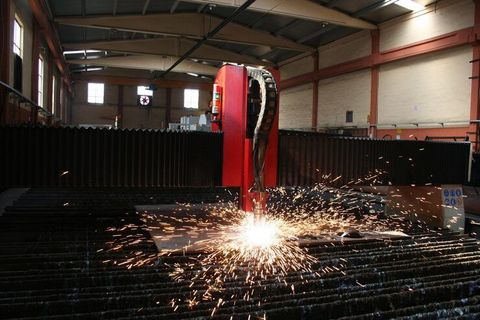
At its core, plasma cutting involves the use of a high-velocity jet of ionized gas, or plasma, to conduct electricity from a torch to the workpiece. The basic principle hinges on the fourth state of matter, known as plasma, which is created when gas is superheated beyond its gaseous phase. As the plasma beam makes contact with the conductive material being cut, it precisely melts a localized area, and the force of the gas expels the molten metal, resulting in a clean-cut edge. This process is applicable to a variety of metals, including steel, stainless steel, aluminum, brass, and copper, among others.
The heart of a plasma cutter is the plasma torch, a handheld or machine-mounted tool designed to control and direct the plasma jet. Inside the torch, a small nozzle constricts the flow of gas, and an electrode is used to generate the electrical arc. When the arc contacts the constricted nozzle, the gas ionizes, transitioning into plasma. This ionized gas then exits the torch at high speeds, reaching temperatures as high as 25,000 degrees Celsius. The torch is guided across the material being cut either manually or by machines equipped with precise controls and software.
Key to understanding the plasma cutting process is the type of gases used to create plasma. Typically, air is the most commonly used gas due to its availability and cost-effectiveness. However, other gases, such as nitrogen, argon, and oxygen, can also be employed depending on the specific requirements of the cut and the material properties. Each gas offers unique advantages; for example, oxygen is renowned for producing high-quality cuts on mild steel, whereas nitrogen may provide better precision with stainless steel.
A crucial aspect of plasma cutting is determining the correct current level, often defined by the thickness of the material to be cut. The amperage affects the power of the plasma jet, dictating the cutting speed and quality. Lower amperage is suitable for thinner materials, resulting in less heat distortion and cleaner cuts, whereas higher amperage will increase cutting capacity and speed, particularly for thicker materials. Achieving the ideal balance is essential for optimizing both efficiency and accuracy.
Plasma cutting systems can be broadly categorized into manual and mechanized systems. Manual systems are handheld devices that rely on the skill of the operator to guide the torch along the desired cutting path. These units are practical for small-scale and less precision-demanding tasks. Mechanized systems, on the other hand, are often equipped with CNC (Computer Numerical Control) technology, allowing for automated cutting that delivers high precision and repeatability. This setup is favored in industrial applications, where consistent accuracy and high production rates are necessary.
Safety is of paramount importance when working with plasma cutters. Operators must wear appropriate protective gear, including gloves, welding helmets with proper filtration (to protect against the intense light and UV radiation), and fire-resistant clothing. The high-temperature nature of the process presents hazards such as burns, eye damage, and respiratory issues from fumes, necessitating a well-ventilated work environment. Safety measures should always be followed diligently to mitigate risks.
Maintenance of plasma cutting equipment is another crucial component in ensuring longevity and reliability of the tools. Routine checks include examining the condition of consumables like electrodes and nozzles that undergo significant wear during operation. Replace these parts promptly to maintain cutting quality and avoid potential disruptions. Regular maintenance of the power supply, air compressor systems, and torch leads will reduce downtime and extend the lifespan of the equipment.
Understanding the intricacies of plasma cutter setup and maintenance can significantly impact both the ease of use and the quality of the cut. Setting the right air pressure, work speed, and ensuring proper ground connection are among the factors that should be accurately managed before operation. Experimenting with different settings and obtaining hands-on experience will gradually build the skills necessary to operate the machine efficiently.
Plasma cutting offers multiple benefits, including faster cuts, flexibility in cutting various shapes and profiles, and the ability to cut metals without much preheat time or distortion. Despite being a remarkable tool in metalworking, mastering its use requires practice and adherence to best practices. In addition, staying informed of advancements in plasma technology can open up new possibilities such as increased cutting speed and precision, as well as broader compatibility with different materials and gases.
For those interested in pursuing plasma cutting further, numerous resources, workshops, and professional courses are available to deepen understanding and enhance skills. With commitment and learning, mastering the art of plasma cutting can be an incredibly rewarding endeavor, enabling innovative fabrication of parts and components across diverse industries.

Related Post...
Automatic Labeling & Coding Machines: An Overview of Systems, Controls and Processes
Updated: September 26, 2026
Read More
Fertilizer Granulation Machines: A Guide to Operation, Materials and Production
Updated: September 26, 2026
Read More