Plastic Compression Molding Machine Guide for Modern Manufacturing Processes
A plastic compression molding machine is industrial equipment used to shape polymer materials by placing a measured amount of material into a heated mold and applying controlled pressure.
Heat and pressure cause the material to soften, flow, or cure within the mold cavity, creating a component with a defined shape. The process is used for various plastic and composite products where controlled molding conditions are required.
Compression molding developed from early methods of shaping thermosetting materials and rubber-like compounds. As polymer technology progressed, machines became more precise, with improved heating systems, hydraulic or electric pressure mechanisms, temperature controls, and automated operating sequences.
A typical plastic compression molding machine contains a mold, heating arrangement, pressure mechanism, control system, and supporting frame. Depending on the machine design, material may be loaded manually or through an automated feeding system. The mold determines the final geometry of the component.
How Compression Molding Works
The basic process starts with a measured quantity of polymer material, often called a charge, being placed into a mold cavity. The mold may already be heated to a specified temperature according to the material being processed.
The mold closes under controlled pressure. As the material is heated and compressed, it spreads through the cavity and takes its shape. Thermoplastic materials may soften and solidify during cooling, while thermosetting materials undergo a chemical curing process that creates a permanent structure.
After the required heating and holding period, the mold opens and the component is removed. Depending on the material and product design, additional operations may include trimming, surface finishing, inspection, or assembly.
Main Components
A plastic compression molding machine generally includes several important components:
- Mold assembly for defining the product shape
- Heating system for controlling mold temperature
- Hydraulic or mechanical pressure system
- Platen or pressing surfaces for applying force
- Control system for managing process conditions
- Ejection mechanism for removing molded components
- Frame and structural components supporting the molding system
- Safety guards and controls around moving and heated areas
The dimensions and configuration of these components depend on the required molding pressure, mold size, material characteristics, and product geometry.
Thermoplastic and Thermosetting Materials
Compression molding can be used with different polymer families. Thermoplastics soften when heated and become solid again as they cool. Thermosetting polymers undergo curing during molding and generally do not return to their original flowable state after they have been fully cured.
Materials used in compression molding can include certain thermosetting compounds, engineering polymers, rubber-related compounds, reinforced plastics, and composite materials. Material selection depends on temperature resistance, mechanical properties, chemical exposure, electrical characteristics, and the intended application.
Importance
Plastic compression molding machines are important because they provide a controlled method for producing shaped polymer and composite components. The process is particularly useful for parts that require specific thicknesses, surface characteristics, dimensional features, or resistance to mechanical and environmental conditions.
Compression molding is used in several industrial sectors, including transportation, electrical equipment, construction, consumer products, industrial machinery, and composite manufacturing.
Industrial Applications
Different materials and mold designs allow compression molding to produce a broad range of components. Examples include:
- Electrical insulation components
- Automotive interior and exterior parts
- Composite panels
- Industrial covers and housings
- Structural polymer components
- Appliance components
- Rubber-related molded products
- Construction materials
- Reinforced polymer components
The process is also used for materials containing reinforcing fibers or fillers. These additions can influence strength, stiffness, heat resistance, dimensional stability, and other properties.
Why Pressure and Temperature Matter
Compression molding depends heavily on the relationship between pressure, temperature, material quantity, and processing time. Insufficient pressure may prevent material from filling the mold properly, while excessive pressure can influence flash formation or mold stress.
Temperature also affects how a polymer flows and cures. If the material temperature is too low, the material may not spread adequately. Excessive temperature can cause degradation or unwanted changes in material properties.
Mold Design
The mold is central to compression molding because it determines the geometry and surface characteristics of the finished component. Mold designers consider cavity shape, material flow, vents, parting surfaces, draft features, heating arrangements, and ejection methods.
Complex geometries may require carefully positioned vents or special mold features to allow air and gases to escape during compression. Mold temperature uniformity can also influence dimensional consistency.
Basic Process Stages
A simplified compression molding cycle can be described as:
- Material preparation and measurement
- Mold preparation and heating
- Material placement
- Mold closing
- Pressure application
- Heating and curing or softening
- Cooling when required
- Mold opening
- Part removal
- Inspection and finishing
Actual sequences vary according to the machine, polymer, mold design, and production process.
Recent Updates
Plastic compression molding machine technology is increasingly influenced by automation, digital controls, improved heating systems, process monitoring, composite materials, and greater attention to material efficiency.
Digital Process Control
Modern machines can use electronic controllers and sensors to monitor pressure, mold temperature, cycle time, platen position, and other process variables. Operators can view these measurements through digital control interfaces.
Data recording can help laboratories and manufacturing facilities compare molding cycles and identify changes in process conditions. The usefulness of collected data depends on sensor accuracy, calibration, process design, and appropriate interpretation.
Automated Material Handling
Automated systems can measure, position, and transfer molding charges into the mold. This can reduce variation associated with manual material placement and can support repeatable process sequences.
Robotic systems may also be used for part removal, trimming, transfer between workstations, and inspection. The degree of automation varies considerably among molding operations.
Improved Heating Systems
Heating technology continues to develop through improved temperature sensing, zoned heating, programmable controllers, and more uniform heat distribution. Precise thermal control is important because different materials respond differently to temperature.
Some systems monitor several locations within a mold or platen to identify temperature differences. This information can help explain variations in curing, flow, or cooling behavior.
Composite Materials
Compression molding is increasingly associated with reinforced polymer and composite materials. Fibers such as glass or carbon can be combined with polymer matrices to create materials with particular combinations of stiffness, strength, weight, and temperature performance.
Processing these materials requires attention to fiber orientation, resin behavior, moisture, mold temperature, pressure, and curing conditions.
Digital Simulation
Computer-aided mold and process simulation can help engineers examine material flow, temperature distribution, pressure development, fiber movement, and potential defects before physical production trials.
Simulation is based on material data and mathematical models. Actual molding results can differ because of variations in material properties, mold conditions, machine characteristics, and environmental factors.
Material Efficiency
Current process development also considers material utilization and production waste. Accurate charge measurement, optimized mold design, controlled flash, and appropriate trimming methods can reduce unnecessary material use.
Recycled or reclaimed polymer content may also be considered for suitable applications. Its use depends on material composition, contamination, processing history, and required product properties.
Laws or Policies
Plastic compression molding machine operation in India can be influenced by machinery safety requirements, factory regulations, electrical rules, environmental provisions, and standards related to plastics and polymer products.
The specific requirements depend on the equipment configuration, workplace, materials being processed, product category, and manufacturing activity.
Machinery Safety
Compression molding machines contain moving platens, high-pressure mechanisms, heated molds, electrical systems, and potentially hot polymer materials. Appropriate guarding, emergency controls, safety interlocks, electrical protection, and operating procedures are important aspects of machine safety.
Factories in India may be subject to applicable provisions under occupational safety and factory regulations. Requirements can differ according to the facility, state implementation, workforce, and manufacturing activity.
Indian Standards
The Bureau of Indian Standards publishes standards covering plastics, polymer products, testing methods, materials, and related industrial practices. The relevant standard depends on the specific material or product.
International standards from organizations such as ISO and IEC can also be relevant to machinery safety, electrical systems, testing procedures, and manufacturing practices.
Environmental Requirements
Plastic-processing facilities may need to address requirements involving industrial waste, plastic waste, emissions, energy use, and material handling. India's plastic waste framework can apply to certain plastic products and manufacturing activities.
The specific environmental obligations depend on the facility, material category, production activity, and applicable central or state requirements.
Tools and Resources
Several engineering tools and technical references help users understand plastic compression molding machines, materials, molds, and process conditions.
Mold Design Software
Computer-aided design software is commonly used to create mold cavities, parting surfaces, vents, ejector arrangements, heating channels, and other mold features. Three-dimensional models can also be used for dimensional analysis and manufacturing preparation.
Process Simulation
Molding simulation software can examine variables such as material flow, temperature distribution, pressure, curing behavior, and potential air entrapment. Such analysis can help explain how mold geometry and process conditions interact.
Pressure Calculators
Basic pressure and force calculations can help explain the relationship between mold area and required pressing force. A simplified relationship is:
Force = Pressure × Area
Actual machine requirements involve additional factors, including material behavior, mold geometry, pressure distribution, safety margins, and machine configuration.
Material Data Sheets
Polymer and composite material data sheets provide information about thermal characteristics, mechanical properties, processing ranges, moisture sensitivity, curing behavior, and other material-specific characteristics.
These references help explain why molding conditions vary between different polymer formulations.
Monitoring Equipment
Plastic compression molding machine systems may use instruments that monitor:
- Mold temperature
- Platen temperature
- Hydraulic pressure
- Applied force
- Mold position
- Cycle time
- Cooling conditions
- Material temperature
The following table summarizes several parameters commonly associated with compression molding:
| Parameter | General Meaning |
|---|---|
| Mold Temperature | Temperature maintained during molding |
| Pressure | Force applied to the material through the mold |
| Charge Weight | Quantity of material placed in the mold |
| Cure Time | Period required for a thermosetting material to cure |
| Cooling Time | Period used to reduce component temperature |
| Mold Pressure | Pressure applied within the molding operation |
| Cycle Time | Duration of the complete molding sequence |
| Platen Position | Position of the pressing surfaces |
Understanding these variables provides a basic framework for interpreting compression molding processes.
FAQs
What is a plastic compression molding machine?
A plastic compression molding machine is equipment that uses heat and pressure to shape polymer or composite material inside a mold. The material takes the shape of the cavity and is then cooled or cured before removal.
How does a plastic compression molding machine work?
A measured material charge is placed into a heated mold, which is then closed under controlled pressure. Heat and pressure allow the material to flow, soften, or cure before the mold opens and the component is removed.
What materials can a plastic compression molding machine process?
The process can be used with certain thermosetting polymers, thermoplastics, reinforced plastics, rubber-related compounds, and composite materials. The appropriate conditions depend on the specific material formulation.
What factors affect compression molding quality?
Material quantity, mold temperature, pressure, curing or heating time, cooling conditions, mold design, and material properties can all affect the resulting component. Moisture and fiber distribution can also matter for particular materials.
What are the main applications of plastic compression molding machines?
Applications include electrical components, automotive parts, composite structures, industrial housings, construction components, appliance parts, and various reinforced polymer products. The appropriate application depends on the material and component design.
Conclusion
A plastic compression molding machine shapes polymer and composite materials by combining controlled heat, pressure, and mold geometry. The process can be used with thermoplastics, thermosetting materials, reinforced polymers, and selected composite formulations. Current developments include digital process monitoring, automated material handling, improved heating control, simulation, and increased use of composite materials. Machine safety, material requirements, product standards, and environmental rules vary according to the equipment, facility, material, and intended application.

Related Post...
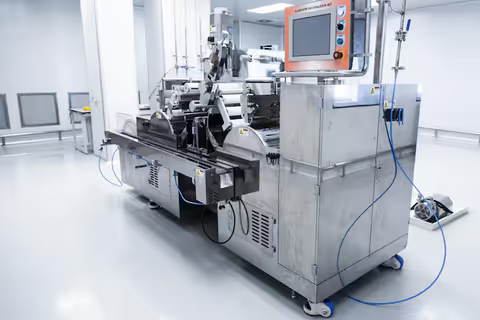
Plastic Compression Molding Machine Guide for Modern Manufacturing Processes
Updated: September 07, 2026
Read More
A Beginner’s Guide to Industrial Packaging Machines and Packaging Lines
Updated: August 18, 2026
Read More
Polishing Machine: Complete Guide, Basics, and Detailed Explanation
Updated: August 22, 2026
Read More