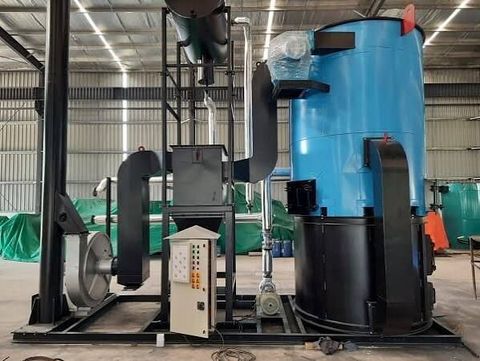
Thermic Fluid Heaters: Insights Into Heating Systems, Thermal Fluids, Temperature Control and Efficiency
A thermic fluid heater is an industrial heating system that transfers heat through a circulating liquid rather than directly heating the process material.
The system uses a heater, pump, expansion arrangement, piping, heat-transfer fluid, and control equipment to move thermal energy to industrial processes. It is commonly used where controlled and relatively uniform indirect heating is required.
Unlike systems that transfer heat directly through steam or combustion gases, a thermic fluid system circulates a specially formulated heat-transfer liquid through a closed loop. The fluid absorbs heat in the heater and carries it to equipment such as reactors, dryers, ovens, presses, tanks, or heat exchangers.
The basic principle is relatively simple. A burner or electric heating element supplies energy to the heater, the fluid absorbs that energy, and a circulation pump moves the heated fluid through the process equipment. After transferring heat, the fluid returns to the heater for another cycle.
Main components
A typical thermic fluid heater system contains several interconnected components. The heater contains the heating chamber and heat-transfer surfaces, while the circulation pump maintains fluid movement through the circuit.
Other important components can include an expansion tank, fluid reservoir, valves, temperature sensors, pressure indicators, filters, insulation, control panels, and safety devices. The exact arrangement depends on the heater design, fuel source, operating temperature, and industrial process.
The major components can be summarized as follows:
| Component | Main function |
|---|---|
| Heater | Transfers energy to the heat-transfer fluid |
| Circulation pump | Moves fluid through the closed circuit |
| Expansion tank | Allows fluid volume changes during heating |
| Heat-transfer fluid | Carries thermal energy |
| Piping | Connects the heater and process equipment |
| Temperature controls | Monitor and regulate operating conditions |
| Safety devices | Help detect abnormal operating conditions |
| Insulation | Reduces unwanted heat loss |
How the heating cycle works
The heating cycle begins when the fluid enters the heater at a lower temperature. Heat is transferred from the combustion chamber or heating elements through the heater surfaces into the circulating fluid.
The heated fluid then travels through insulated pipes toward the process equipment. At the process heat exchanger or heating surface, thermal energy passes from the fluid into the material being processed.
After losing part of its heat, the fluid returns through the circulation circuit. The heater raises its temperature again, allowing the cycle to continue.
Importance
Why indirect heating is used
Many industrial processes require a stable source of heat without direct contact between the flame and the material. Thermic fluid heaters provide indirect heat transfer, which can be useful for processes involving chemicals, food materials, polymers, textiles, wood products, asphalt-related materials, and other industrial products.
A closed-loop arrangement can also allow heat to be distributed to several pieces of equipment from one heating system. This can simplify the layout of facilities where multiple process units require thermal energy at related temperature ranges.
Applications across industries
Thermic fluid heating systems are used in many industrial settings. Common applications include:
Chemical processing and reaction systems
Food and edible-oil processing
Pharmaceutical manufacturing environments
Textile processing
Wood and panel production
Asphalt and bitumen heating
Industrial ovens and dryers
Plastic and polymer processing
Heat exchangers and process tanks
The actual suitability of a thermic fluid heater depends on the process temperature, heat demand, fluid characteristics, equipment design, and operating conditions.
Factors affecting performance
The operation of a thermic fluid heater depends on several variables rather than a single specification. Fluid temperature, circulation rate, heat-transfer area, burner output, insulation, and process demand all influence the amount of usable heat reaching the process equipment.
Heat-transfer fluid condition is also important. Overheating, contamination, oxidation, or prolonged use beyond the fluid's intended operating range can alter its physical and chemical characteristics.
Regular monitoring may therefore include:
Fluid temperature
Fluid level
Circulation rate
Pump condition
Burner operation
Exhaust temperature
Pressure readings
Expansion-tank condition
Heat-transfer fluid condition
Recent Updates
Digital monitoring and controls
Between 2024 and 2026, industrial heating systems have increasingly incorporated digital controls, electronic sensors, programmable controllers, and automated monitoring. These technologies can collect operating information such as temperature, pressure, flow, burner status, and alarm conditions.
Modern control panels may display several process parameters in one interface. Some systems can also record operating data, making it easier to identify changes in temperature or circulation over time.
Digital controls do not eliminate the need for physical inspection. Sensors, pumps, burners, valves, and heat-transfer fluids remain mechanical or chemical components that require appropriate inspection and maintenance procedures.
Energy management
Energy efficiency continues to influence the design of industrial heating equipment. Improved insulation, combustion controls, heat recovery arrangements, and variable-speed circulation systems can be incorporated into some heater designs.
Heat recovery is particularly relevant where exhaust gases or other hot streams contain usable thermal energy. Depending on the plant configuration, recovered heat may be directed toward combustion air, process fluids, or other suitable applications.
Electric heating systems
Electric thermic fluid heaters are also receiving attention in facilities where electricity is available as a practical heat source. Instead of a fuel-fired burner, electrical heating elements transfer energy to the circulating fluid.
The choice between electric and fuel-fired heating depends on factors such as required heat output, electricity availability, fuel infrastructure, operating temperature, emissions requirements, and facility design.
Condition monitoring
Another continuing development is the use of condition-monitoring systems. Sensors can track equipment variables and identify changes that may require investigation.
For example, an unusual change in circulation pressure or pump behavior may indicate a developing equipment issue. Such information can support planned inspection, although sensor readings still need to be interpreted within the context of the complete heating system.
Laws or Policies
Regulatory framework in India
In India, industrial thermic fluid heaters can be affected by requirements relating to workplace safety, environmental emissions, electrical systems, fuel handling, pressure equipment, and factory operations. The exact requirements depend on the heater design, fuel type, installation, industry, and location.
The Ministry of Environment, Forest and Climate Change and the Central Pollution Control Board provide environmental frameworks relevant to industrial emissions. State Pollution Control Boards may establish or enforce requirements applicable to particular facilities.
Factory and workplace safety
Industrial facilities can also fall under occupational safety requirements administered through applicable central and state legislation. The Occupational Safety, Health and Working Conditions Code, 2020 provides a broader framework for occupational safety and working conditions, subject to its implementation and applicable rules.
Thermic fluid systems involve high temperatures, hot surfaces, combustible fuels in some configurations, and pressurized circulation circuits. Appropriate safeguards therefore include temperature monitoring, emergency shutdown arrangements, protective insulation, suitable ventilation, and controlled access to hazardous areas.
Environmental considerations
Fuel-fired heaters may generate combustion emissions that are subject to applicable environmental requirements. The relevant limits and monitoring requirements depend on fuel type, heater capacity, industrial category, and local regulatory conditions.
Facilities may also need to manage used heat-transfer fluid and other maintenance materials according to applicable waste-management requirements. Local authorities and project-specific environmental approvals can determine the exact obligations.
Tools and Resources
Temperature and heat calculations
Engineers commonly use heat-load calculations to determine the thermal requirement of a process. A simplified heat relationship can be expressed as:
Heat required = Mass × Specific heat × Temperature change
Actual industrial calculations can be more complex because they may include heat losses, phase changes, reaction heat, equipment heat capacity, and continuous material flow.
Heat-transfer fluid information
Technical data sheets for heat-transfer fluids provide important information about operating temperature ranges, viscosity, flash point, thermal stability, and handling requirements. The fluid manufacturer's technical documentation should be considered together with the heater manufacturer's operating specifications.
Monitoring instruments
Common instruments associated with thermic fluid heaters include temperature sensors, pressure gauges, flow indicators, level sensors, exhaust-gas temperature sensors, and combustion monitoring equipment.
Facilities may also use programmable logic controllers and supervisory monitoring platforms to collect and display operating information.
Useful technical resources
Relevant resources can include:
Heater operating manuals
Heat-transfer fluid technical data sheets
Industrial heating design guides
Factory safety documentation
Environmental compliance documents
Equipment inspection records
Process heat-load calculations
Applicable Indian Standards and regulatory publications
These resources help explain equipment limits, operating procedures, safety controls, and maintenance requirements.
FAQs
What is a thermic fluid heater?
A thermic fluid heater is an industrial heating system that uses a circulating heat-transfer liquid to move thermal energy from a heater to process equipment. The fluid operates in a closed circulation loop and transfers heat indirectly.
How does a thermic fluid heater work?
A heater raises the temperature of the heat-transfer fluid, and a circulation pump moves the heated fluid through pipes to process equipment. After transferring heat, the fluid returns to the heater and is reheated.
What fluid is used in a thermic fluid heater?
Thermic fluid heaters use specially formulated heat-transfer liquids designed for particular temperature ranges. Mineral-based and synthetic fluids are among the types used in industrial systems. Selection depends on operating temperature, system design, fluid properties, and manufacturer requirements.
What are thermic fluid heaters used for?
Thermic fluid heaters can provide indirect process heat for applications such as chemical processing, food processing, textile operations, dryers, ovens, asphalt-related processes, polymer production, and heat exchangers.
How is a thermic fluid heater maintained?
Maintenance can include checking fluid condition, circulation, pumps, burners or heating elements, temperature controls, valves, insulation, expansion arrangements, and safety devices. The exact inspection schedule depends on equipment design, operating conditions, and applicable regulations.
Conclusion
Thermic fluid heaters provide indirect heat transfer by circulating a heat-transfer liquid between a heating unit and industrial process equipment. Their applications include chemical processing, food production, textiles, dryers, ovens, polymers, and other processes requiring controlled thermal energy. Recent developments have focused on digital monitoring, energy management, electric heating, and condition monitoring. Safe operation depends on appropriate equipment design, fluid management, controls, inspections, and compliance with applicable industrial and environmental requirements.

Related Post...

Water Quality Test Kits & Meters: A Guide to Features, Measurements and Test Methods
Updated: September 15, 2026
Read More
AI in Business Analytics: Insights Into Predictive Modeling, Automation and Data-Driven Decisions
Updated: September 29, 2026
Read More
Industrial Weighing Systems: A Guide to Load Cells, Weighing Technologies and Process Control
Updated: September 29, 2026
Read More