AI & Industrial Automation: Explore Smart Manufacturing, Robotics and Intelligent Control Systems
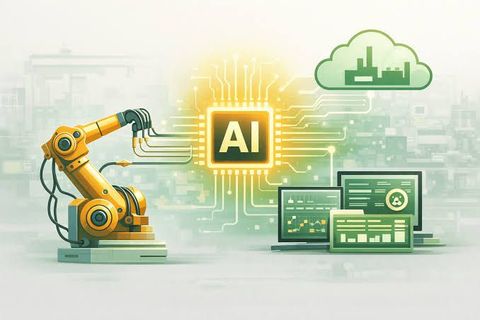
Artificial intelligence is reshaping industrial automation by moving systems beyond fixed, rule-based control toward adaptive, data-driven, and increasingly autonomous operation. In smart manufacturing environments, AI enhances robotics, enables intelligent control loops, supports predictive decision-making, and connects machines, processes, and enterprise systems into cyber-physical networks.
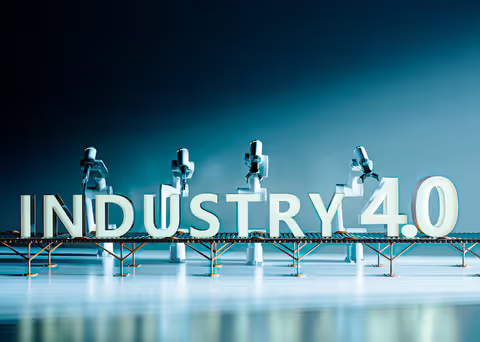
This evolution supports higher productivity, improved quality, greater flexibility, and more resilient operations while aligning with Industry 4.0 principles and the emerging human-centric focus of Industry 5.0. This overview examines the core technologies, applications in robotics and control, integration architectures, benefits, challenges, and practical considerations.
The Convergence of AI and Industrial Automation
Industrial automation has progressed from mechanical systems and programmable logic controllers (PLCs) to networked, software-defined architectures. AI adds perception, learning, prediction, and decision-making capabilities that allow systems to handle variability, optimize in real time, and respond to disruptions with less human intervention.
From Rule-Based to Intelligent Systems
Traditional automation executes predefined sequences reliably under stable conditions. AI-powered systems analyze sensor data, historical records, and real-time feedback to detect anomalies, adjust parameters, plan actions, and coordinate across multiple assets. Machine learning models, computer vision, reinforcement learning, and emerging agentic approaches expand what automation can achieve.
Smart Manufacturing Context
Smart manufacturing integrates AI with the Industrial Internet of Things (IIoT), edge and cloud computing, digital twins, and advanced connectivity. The result is factories that monitor themselves, predict issues, optimize production schedules, and adapt to changing demand or conditions while maintaining safety and quality standards.
AI-Enhanced Robotics in Manufacturing
Robotics is one of the most visible domains where AI delivers immediate impact.
Perception and Vision Systems
Deep learning-based computer vision enables robots to recognize parts, inspect quality, perform bin picking, and handle unstructured environments. Cameras and sensors combined with trained models allow robots to adapt to variations in position, orientation, lighting, or part appearance that would challenge purely programmed systems.
Autonomous Navigation and Mobility
Autonomous mobile robots (AMRs) and guided vehicles use simultaneous localization and mapping (SLAM), sensor fusion, and AI path planning to navigate dynamic factory floors, avoid obstacles, and optimize material transport routes. These capabilities support flexible logistics without fixed infrastructure in many cases.
Collaborative and Adaptive Robots
Collaborative robots (cobots) leverage AI for safer human-robot interaction, force sensing, and task learning. Advanced systems can be taught by demonstration or refine motions through reinforcement learning. Emerging physical AI and multi-modal models aim to give robots broader reasoning and adaptability across tasks.
Task Planning and Multi-Robot Coordination
AI supports higher-level planning—sequencing operations, allocating work among robots, and recovering from interruptions. Multi-agent approaches allow fleets of robots and machines to negotiate and coordinate resources in real time.
Intelligent Control Systems
Beyond discrete robotics, AI improves continuous and discrete process control.
Advanced Process Control and Optimization
Machine learning models complement or enhance traditional PID and model-predictive control by handling nonlinearities, predicting disturbances, and optimizing setpoints for energy, quality, or throughput. Reinforcement learning has been demonstrated in laboratory and pilot settings for tighter process variability.
Predictive and Prescriptive Capabilities
AI analyzes vibration, temperature, current, and other signals to predict equipment degradation and recommend maintenance actions before failures occur. Similar techniques forecast quality deviations and enable upstream process corrections.
Digital Twins and Simulation
Digital twins—virtual replicas of machines, lines, or entire plants—combine physics-based models with real-time data and AI. They support what-if analysis, virtual commissioning, operator training, and continuous optimization. AI accelerates model calibration and scenario evaluation.
Agentic and Multi-Agent Systems
Agentic AI systems can set goals, reason over options, and execute coordinated actions across machines, software systems, and workflows with reduced human oversight. Multi-agent frameworks distribute decision-making for production scheduling, resource allocation, and disruption response, offering greater scalability and resilience than purely centralized control.
System Architecture and Integration
Effective AI deployment requires careful integration with existing industrial infrastructure.
Edge, Cloud, and Hybrid Computing
Latency-sensitive control and safety functions often run at the edge or on industrial controllers, while training, large-scale analytics, and fleet optimization leverage cloud resources. Software-defined automation and industrial edge platforms facilitate deployment of AI models closer to the process.
Data Foundations
High-quality, contextualized data from sensors, PLCs, SCADA, MES, and enterprise systems is essential. Data pipelines, governance, and integration layers determine how effectively AI models can be trained, validated, and maintained in production.
Interoperability and Standards
Open architectures, standardized interfaces, and evolving industrial AI standards help systems from different vendors work together. Cybersecurity, functional safety, and explainability requirements remain critical when AI influences control actions.
Benefits Across Operations
Well-implemented AI-driven automation delivers measurable gains:
- Higher overall equipment effectiveness through reduced downtime and optimized performance.
- Improved product quality via real-time inspection and process adjustment.
- Greater production flexibility and faster response to demand or supply changes.
- Enhanced worker safety by automating hazardous or ergonomically difficult tasks and providing decision support.
- Energy and resource efficiency through continuous optimization.
- Better visibility and faster root-cause analysis across the value stream.
Challenges and Implementation Considerations
Adoption is not without obstacles. Data quality, volume, and labeling remain practical hurdles. Integrating AI with legacy control systems requires careful engineering. Models must be validated for reliability, robustness to distribution shifts, and safe behavior under edge cases. Explainability and human oversight are essential for trust and regulatory compliance in high-stakes environments. Cybersecurity risks increase as systems become more connected and autonomous. Workforce skills must evolve to design, supervise, and maintain AI-enabled systems. Initial investment and clear return-on-investment pathways influence the pace of scaling from pilots to full deployment.
Outlook and Emerging Directions
The trajectory points toward greater autonomy, tighter human-AI collaboration, and more sustainable operations. Physics-informed machine learning, generative AI for design and troubleshooting, foundation models adapted to industrial data, and advanced digital twins are expanding capabilities. Industry 5.0 emphasizes resilience, sustainability, and human-centric design alongside efficiency. Multi-agent systems and agentic AI are expected to play larger roles in orchestrating complex factories. Standards development, validation methodologies, and responsible deployment practices will shape how rapidly and safely these technologies scale.
AI and industrial automation together are transforming manufacturing from rigidly programmed systems into adaptive, intelligent, and increasingly autonomous operations. By enhancing robotics with perception and planning, strengthening control systems with prediction and optimization, and connecting assets through smart architectures, manufacturers gain the flexibility, efficiency, and resilience required in modern production environments. Success depends on solid data foundations, thoughtful integration with existing automation, rigorous validation, and attention to safety, cybersecurity, and people. When these elements align, AI becomes a powerful enabler of smart manufacturing and the next generation of industrial performance.

Related Post...
AI Tools for Everyday Life: A Guide to Productivity and Smart Automation
Updated: October 29, 2026
Read More
Production Technology: A Guide to Modern Manufacturing Systems
Updated: September 01, 2026
Read More
Recycling Machines: A Comprehensive Guide to Sustainable Waste Management
Updated: October 09, 2026
Read More