Industrial Mineral Water Plant Machines: An Overview of Purification, Filtration and Bottling Technology
Industrial mineral water plants transform raw source water—typically groundwater, spring water, or other approved sources—into safe, consistent, bottled drinking water. The process combines multi-stage purification and filtration to remove suspended solids, organic compounds, microorganisms, and excess dissolved solids while managing or restoring desirable mineral content, followed by hygienic bottling and packaging.
Industrial mineral water plants transform raw source water—typically groundwater, spring water, or other approved sources—into safe, consistent, bottled drinking water. The process combines multi-stage purification and filtration to remove suspended solids, organic compounds, microorganisms, and excess dissolved solids while managing or restoring desirable mineral content, followed by hygienic bottling and packaging. Modern plants integrate water treatment systems with rinsing, filling, capping, labeling, and packing equipment to achieve high throughput, product safety, and regulatory compliance. This overview covers purification and filtration technologies, key equipment, bottling systems, process flow, and practical considerations.
Source Water and Overall Process Flow
Raw water quality varies significantly by source and location. A typical industrial process follows a sequential treatment train designed to progressively remove contaminants while meeting drinking-water and mineral-water standards.
Common stages include:
- Source intake and coarse screening
- Pre-treatment (multimedia/sand filtration, activated carbon)
- Fine filtration and membrane processes (ultrafiltration, reverse osmosis, or nanofiltration as required)
- Disinfection (UV, ozone)
- Optional remineralization or blending
- Hygienic storage and transfer to the bottling line
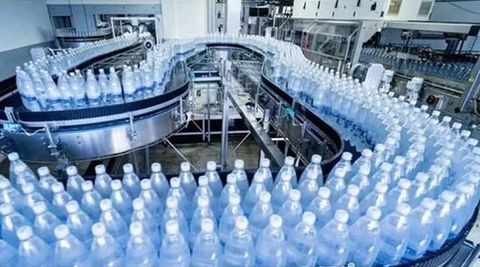
- Bottle rinsing, filling, capping, labeling, coding, and secondary packaging
The exact configuration depends on source water analysis, target product type (natural mineral water, spring water, or purified/remineralized water), and local regulations.
Purification and Filtration Technologies
Pre-Treatment Filtration
Multimedia or pressure sand filters remove suspended solids, turbidity, iron, manganese precipitates, and larger particles. These filters typically use layered media (anthracite, sand, gravel) and include automatic backwash cycles. Activated carbon filters follow, adsorbing chlorine, organic compounds, taste- and odor-causing substances, and certain chemical contaminants. Precision or security cartridge filters (commonly 5 micron or finer) protect downstream membrane systems from particle breakthrough.
Membrane Filtration and Reverse Osmosis
Ultrafiltration (UF) membranes remove bacteria, viruses, colloids, and fine particles while allowing dissolved minerals to pass, making UF suitable when the goal is to retain natural mineral content. Reverse osmosis (RO) uses semi-permeable membranes under pressure to reject a high percentage of dissolved salts, heavy metals, and other contaminants, producing low-TDS water. RO is widely used for purified water production; the permeate may later be remineralized if a specific mineral profile is desired. Softening or antiscalant dosing is often applied upstream of RO to control scaling.
Disinfection Systems
Ultraviolet (UV) sterilizers inactivate microorganisms by damaging their DNA. Ozone generators produce ozone gas that provides strong oxidation and residual disinfection, helping extend shelf life and maintain microbiological quality in storage and filling. These systems are typically installed after membrane treatment and before or during transfer to the filling line. Some plants also use ozone or UV for bottle and cap disinfection.
Remineralization and Final Polishing
When RO is used, controlled addition of minerals (such as calcium and magnesium salts) or blending with mineral-rich water restores a desirable taste and composition. Final absolute micron filters and online monitoring ensure the water meets quality specifications before bottling.
Key Plant Equipment and Machine Types
Water Treatment Skids and Systems
Integrated treatment plants include raw-water pumps, multimedia and carbon filters, cartridge housings, high-pressure pumps, RO or UF membrane arrays, UV units, ozone generators, product water storage tanks (often stainless steel), and control systems with instrumentation for flow, pressure, conductivity/TDS, and residual disinfectant. Capacities range from a few cubic meters per hour for smaller operations to large continuous systems serving high-volume bottling lines.
Bottling and Packaging Machinery
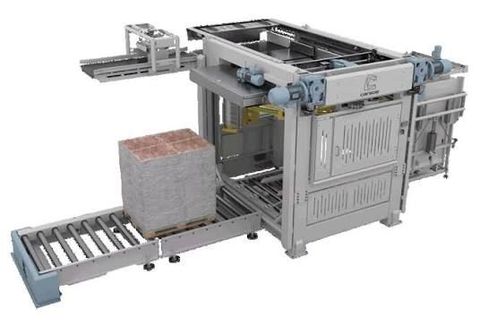
The core of the packaging line is typically a fully automatic rinser-filler-capper monoblock. Bottles are rinsed (often with treated water or sterilizing solution), filled under hygienic conditions (gravity, volumetric, or flow-meter systems), and capped. Upstream equipment may include PET blow-moulding machines that form bottles from preforms. Downstream systems handle labeling (sleeve, pressure-sensitive, or BOPP), batch coding, inspection, shrink-wrapping or case packing, and palletizing. Conveyors and automated controls synchronize the entire line.
Supporting Systems
Clean-in-place (CIP) systems maintain hygiene of tanks, pipes, and fillers. Quality-control laboratories support chemical and microbiological testing. Air filtration, positive-pressure filling rooms, and material handling equipment further support sanitary production.
Process Control, Hygiene and Quality Assurance
Consistent product quality requires continuous monitoring of key parameters (turbidity, conductivity/TDS, pH, residual ozone or chlorine, microbiological indicators) and adherence to validated cleaning and sanitation procedures. Hygienic design—smooth surfaces, drainable piping, food-grade materials (typically stainless steel)—minimizes contamination risk. Regulatory compliance (local drinking-water and packaged-water standards) governs treatment objectives, labeling, and testing frequency.
Capacity, Flexibility and Industrial Considerations
Plant capacity is matched to market demand and can range from small-scale lines producing a few thousand bottles per hour to high-speed lines exceeding tens of thousands of bottles per hour. Flexibility in bottle sizes (commonly 200 ml to 2 L or larger, plus returnable bulk formats) and the ability to handle different product variants influence equipment selection. Energy and water efficiency, recovery of RO reject streams where feasible, and reliable after-sales support are important operational factors. Source-water variability requires robust pre-treatment design and periodic review of the treatment train.
Industrial mineral water plant machines integrate multi-stage purification and filtration—multimedia and carbon filtration, membrane processes (UF or RO), UV and ozone disinfection, and optional remineralization—with automated rinsing, filling, capping, and packaging systems. The resulting process delivers safe, consistent bottled water while meeting regulatory and quality requirements. Proper equipment selection, based on source-water characteristics, target product specifications, and production volume, enables efficient, hygienic, and scalable mineral water production.

Related Post...
Bio-Based Polymer Extrusion Machines: Discover Sustainable Materials and Processing Technology
Updated: October 31, 2026
Read More